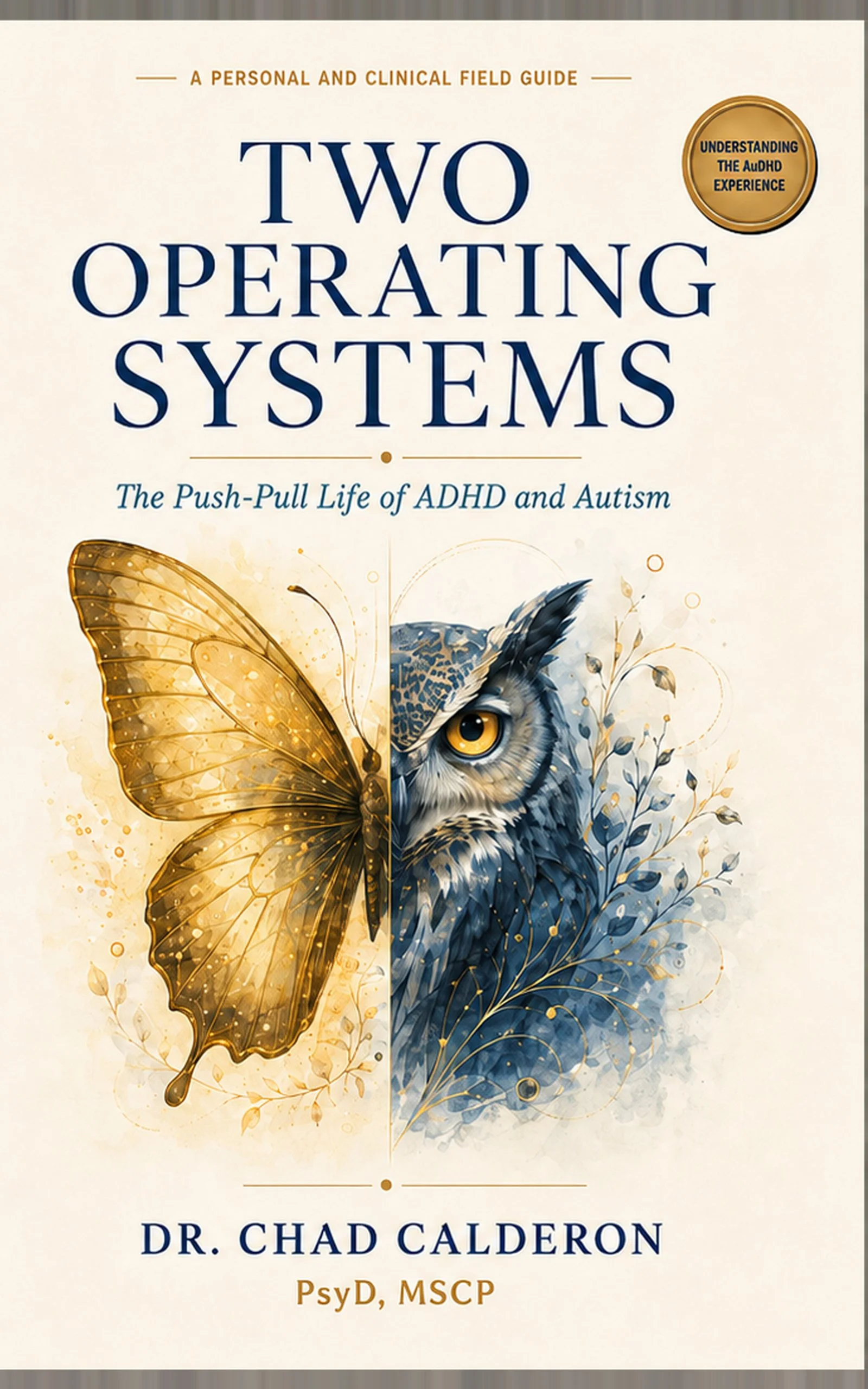
Two Operating Systems | ADHD & Autism AuDHD Book
What happens when ADHD and autism live in the same nervous system at the same time?
Two Operating Systems explores the push-pull experience of AuDHD: needing novelty and predictability, craving stimulation while becoming overwhelmed by input, wanting connection and then needing recovery, and relying on structure while resisting control.
Written by clinical psychologist Dr. Chad Calderon, the book focuses on the internal negotiation behind behaviors that can look inconsistent from the outside. It offers a more useful way to understand changing access, burnout, executive functioning, sensory needs, masking, and the cost of trying to function inside systems built for only one side of the person.
For neurodivergent adults who have spent years wondering why no single explanation ever seemed to fully fit.
The Psychology of Rest

This presentation explores the science of psychological recovery and four experiences that make rest restorative: detachment, relaxation, mastery, and control. It also examines why vacations often provide only temporary relief, how someone can remain highly functional while quietly depleting their resources, and why burnout can eventually disrupt access to capacities that once felt automatic.
The goal is not simply to rest more. It is to understand what makes rest actually work.

The Hidden Cost
The Price of Looking Fine. The Invisible Effort Nobody Sees.
Book Two in the Functional on the Outside series.
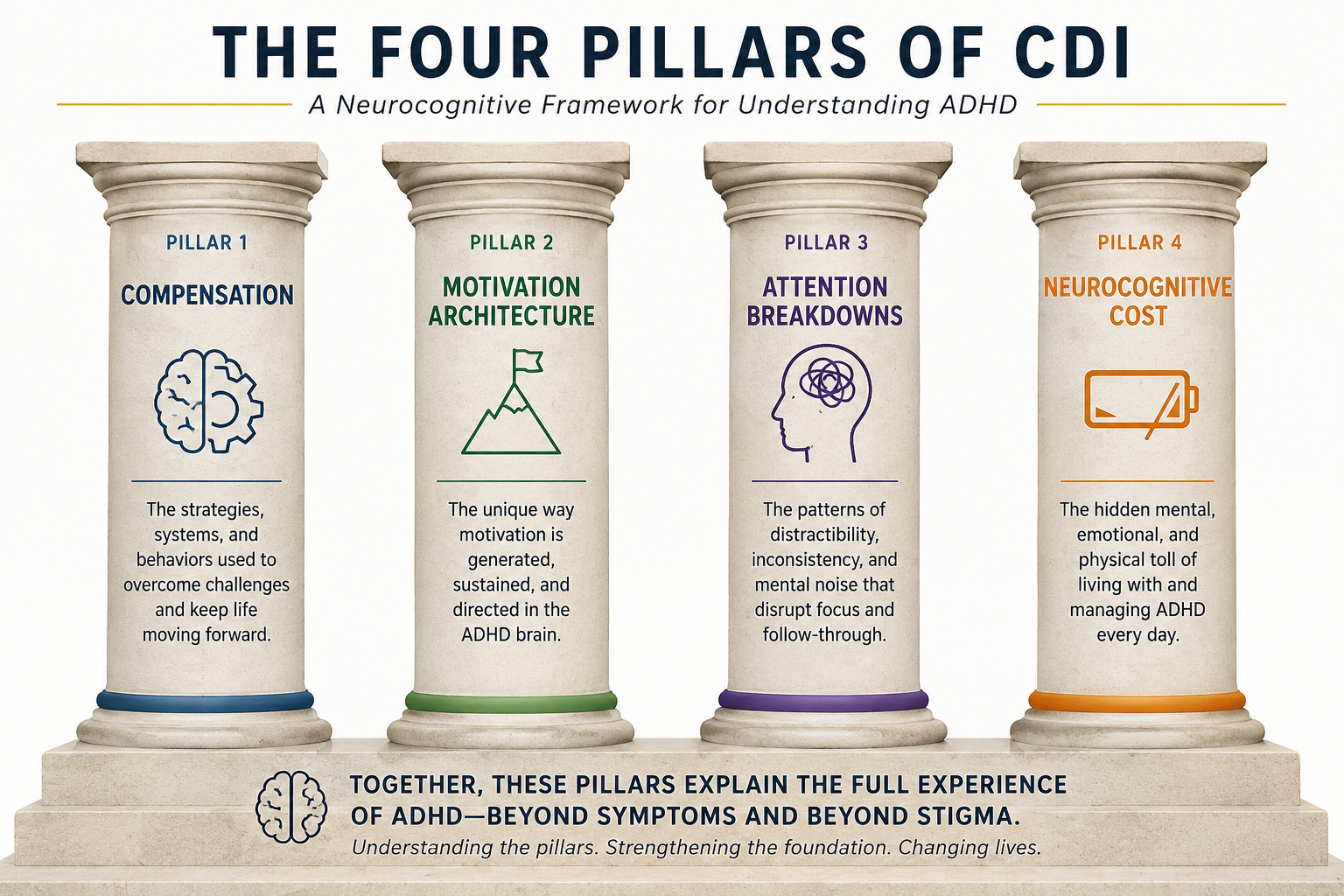
For adults who appear capable while quietly paying the price for it. The Hidden Cost explores compensation, attention breakdown, burnout, relationships, work, medication, AuDHD, and the invisible effort required to keep looking fine.
Written by clinical psychologist Dr. Chad Calderon, PsyD, MSCP.
“Life-changing.”
“Healing.”
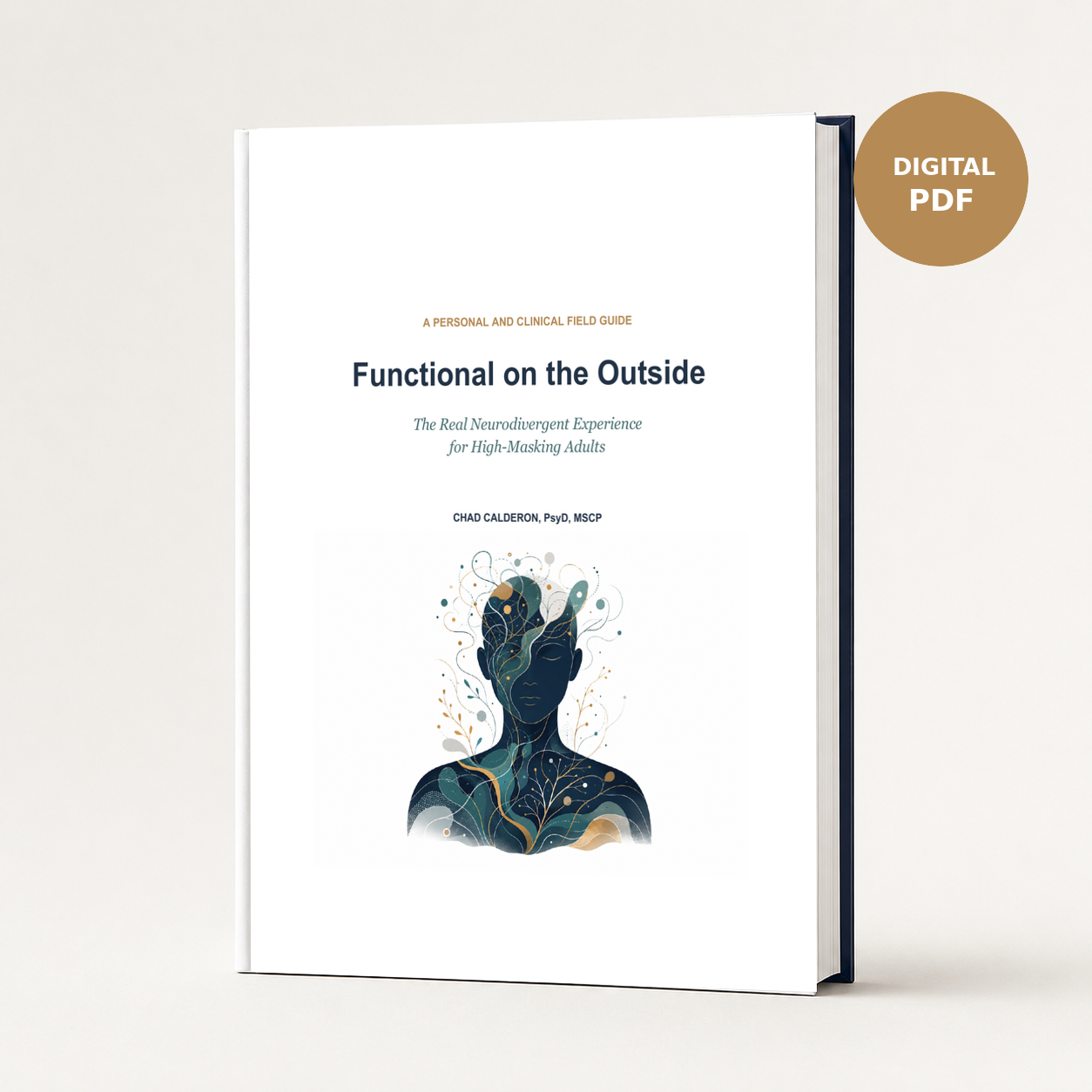
The top resource for navigating AuDHD, anxiety, burnout, or depression. Get the book today. Functional on the Outside: The Real Neurodivergent Experience for High-Masking Adults
Functional on the Outside explores the hidden experience of high-masking ADHD, autistic, and AuDHD adults who appear capable and successful while privately navigating executive dysfunction, task paralysis and procrastination, burnout, shame, emotional overwhelm, and chronic self-doubt.
Written by licensed psychologist Chad Calderon, PsyD, MSCP, who explains why ordinary tasks can feel neurologically expensive, why motivation and willpower are often misunderstood, and why procrastination may be emotional self-protection rather than laziness.
Inside, you will learn how to:
• Recognize masking, burnout, and task paralysis
• Understand the emotions underneath avoidance
• Work with motivation and executive functioning
• Use practical strategies designed for neurodivergent brains
53 pages. Instant digital download. Just $19. Click Below
The #1 rated book for AuDHD, anxiety, burnout, depression, chronic stress, and more! Useful for everyone.
The Guide to Unmasking for ADHD, AuDHD & Autism:
Explore masking and reconnect with what feels authentic.
The AuDHD Push-Pull System: opposing needs can coexist without either side being wrong.
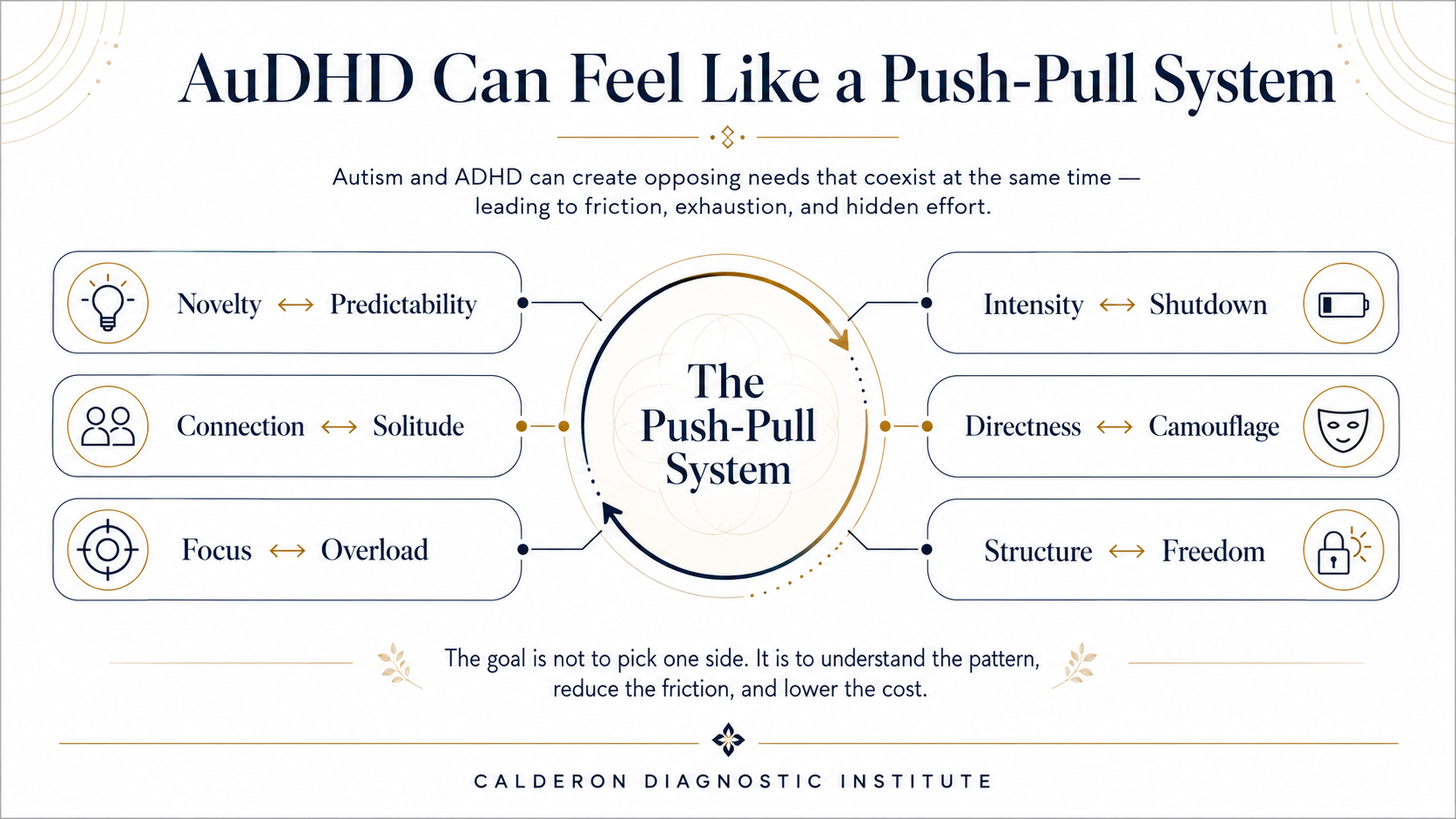
The Push-Pull System
You are not inconsistent or lazy. AuDHD can mean balancing competing needs within the same nervous system. What looks contradictory from the outside may actually reflect a real push-pull between novelty and predictability, freedom and structure, connection and recovery, stimulation and sensory protection, or ambitious ideas and limited capacity.
The Push-Pull System was created to help adults identify where opposing needs create the greatest friction, exhaustion, and recovery cost.
Common push-pulls may include:
Novelty ↔ Predictability
Connection ↔ Solitude
Focus ↔ Overload
Intensity ↔ Shutdown
Directness ↔ Camouflage
Structure ↔ Freedom
The goal is not to decide which side is correct. Both sides may be real and necessary. The goal is to understand the pattern, reduce unnecessary conflict, and build a life that makes room for both needs.
The Push–Pull Inventory
Ever feel like you need routine but also get bored by it, want connection but need to recover afterward, or crave stimulation until everything becomes too much?
The Push–Pull Inventory helps put words to the competing needs often experienced by people with ADHD, autism, or both.
A brief, clinician-developed inventory exploring the competing needs and regulatory experiences often described by people with ADHD, autism, or both. This qualitative tool is designed to support self-reflection and clinical discussion rather than produce a diagnostic score.
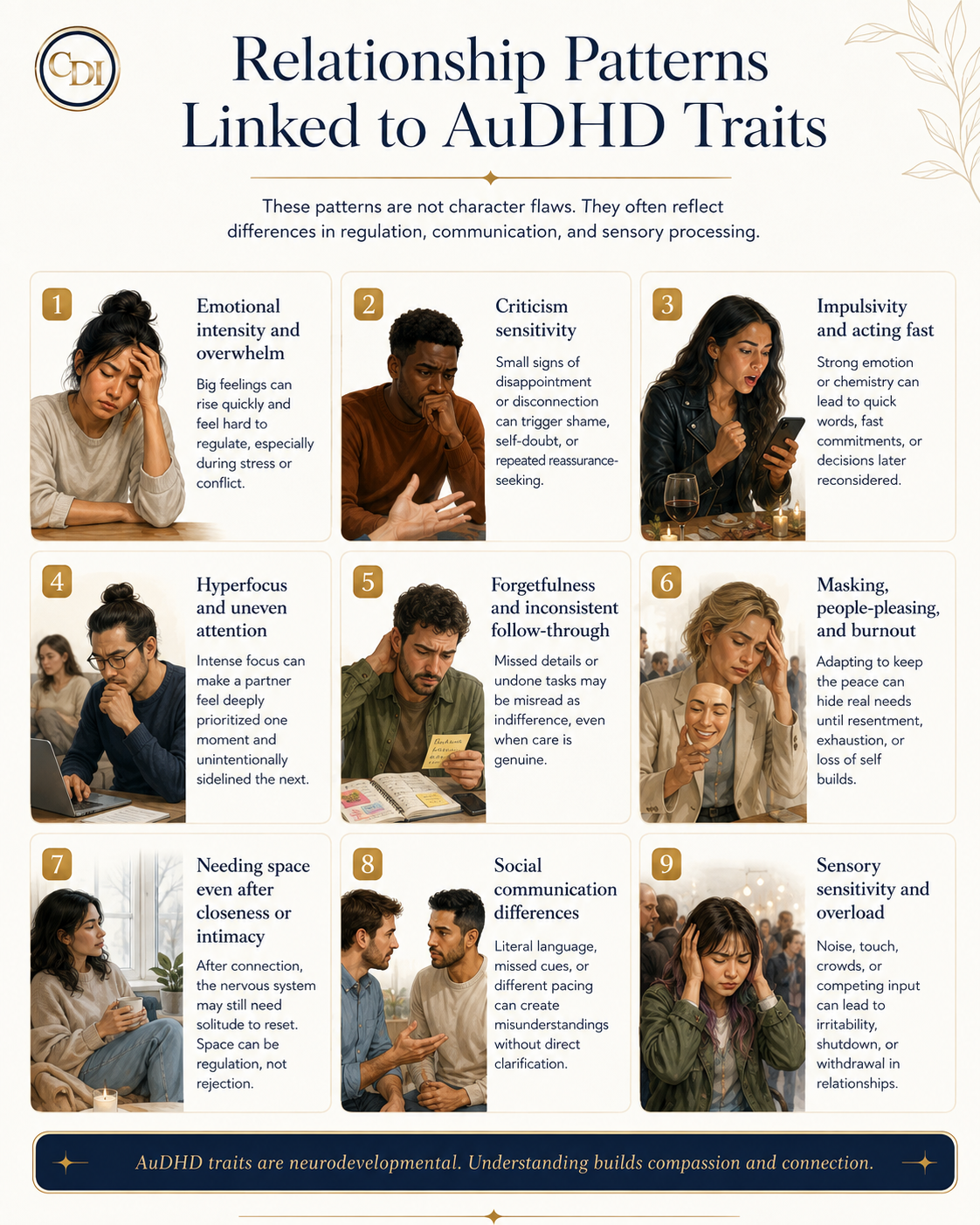
Top Ways to Support an AuDHD Partner
Communicate directly instead of relying on hints or implied expectations.
Ask what kind of support would be helpful rather than assuming.
Give advance notice when plans or routines may change.
Respect their need for space after conflict, closeness, or intimacy without automatically interpreting it as rejection.
Allow time to recover from sensory, emotional, or social overload.
Use shared reminders, calendars, and routines collaboratively rather than as criticism or control.
Make requests clear and specific, with concrete timelines instead of “later” or “soon.”
Break overwhelming tasks into smaller, manageable starting points.
Offer body doubling, shared planning, or help getting started without taking over.
Build in transition time when moving between tasks, plans, or conversations.
Remember that forgetfulness, uneven attention, or inconsistent follow-through do not necessarily reflect a lack of care.Approach difficult moments with curiosity, patience, and problem-solving rather than criticism or shame.
Accept that some differences may not need to be changed. Work collaboratively on specific behaviors and their impact on the relationship, rather than trying to change your partner’s personality or neurotype.
When recurring communication problems or value conflicts arise, consider couples counseling with a therapist who understands ADHD, autism, and AuDHD relationships.
Remember that ADHD, autism, and AuDHD brains may process attention, emotion, sensory input, communication, and demands differently. Respect how their nervous system works rather than expecting them to function in a neurotypical way.
CDI Care Form
The CDI-CARE is a clinician-developed adult self-report measure from Calderon Diagnostic Institute. It is currently in pilot development and has not yet been standardized or normed. It is designed to capture patterns of compensation, support dependence, attention, executive functioning, emotional regulation, and related areas that often arise in adult neurodevelopmental and psychological evaluations. It may be especially useful for exploring complex or highly compensated ADHD and AuDHD presentations.
A public overview of the measure is available here. The full instrument, including scoring guidance, qualitative interpretation, and supporting research sources, is available to clinicians upon request. Just send us an email.
Free AuDHD Clinical Training
for Psychologists, Psychiatrists, Therapists, Counselors, Social Workers, Psychiatric Nurse Practitioners, Primary Care Providers, and Other Health Professionals
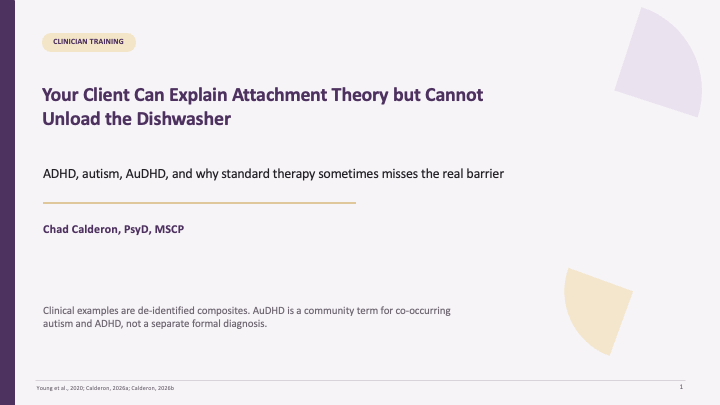
Access Dr. Chad Calderon's free AuDHD clinician training from Calderon Diagnostic Institute to learn practical, evidence-informed strategies for adapting CBT, DBT, ACT, and solution-focused therapy for adults with ADHD, autism, and AuDHD. Topics include masking, cognitive rigidity, sensory overload, cognitive load, translating insight into action, and making therapy more neurologically accessible.
Opening Up: A Free Radically Open Dialectical Behavior Therapy–Informed Worksheet
RO-DBT-informed skills can help AuDHD adults reduce masking and rigid overcontrol while building greater flexibility, openness, and authentic connection.
This free clinical worksheet helps clients explore overcontrol, emotional expression, flexibility, social signaling, vulnerability, and connection. It includes guided reflection questions, an openness experiment, and a weekly self-check to support practical behavior change.
Adapted from principles associated with Radically Open Dialectical Behavior Therapy. This independent resource is not an official RO-DBT treatment handout and is not affiliated with the developers of RO-DBT.
Getting Unstuck:
A Brief Three-Session Solution-Focused Therapy Guide
Solution-Focused Brief Therapy can help AuDHD adults build on what already works, identify practical next steps, and make progress without getting stuck in lengthy problem analysis.
This free clinical resource provides a structured three-session framework for helping clients move from repeated problem analysis (insight-oriented therapy) toward practical action. The guide uses Solution-Focused Brief Therapy principles to explore exceptions, strengths, the miracle question, accountability, behavioral experiments, and small next steps.
Designed for clinicians who want a clear, practical framework when clients feel stuck, understand the problem intellectually, but are having difficulty translating insight into change.
Looking for more AuDHD resources, customized worksheets, or trainings?
Complete the form below to tell us what you need. Dr. Calderon or a member of our team will personally review your request and respond with tailored options.
Also check out our blogs — we’re a warm, funny, and personable practice that offers expert consulting and training.