
PERSONALITY TEST
PERSONALITY TEST
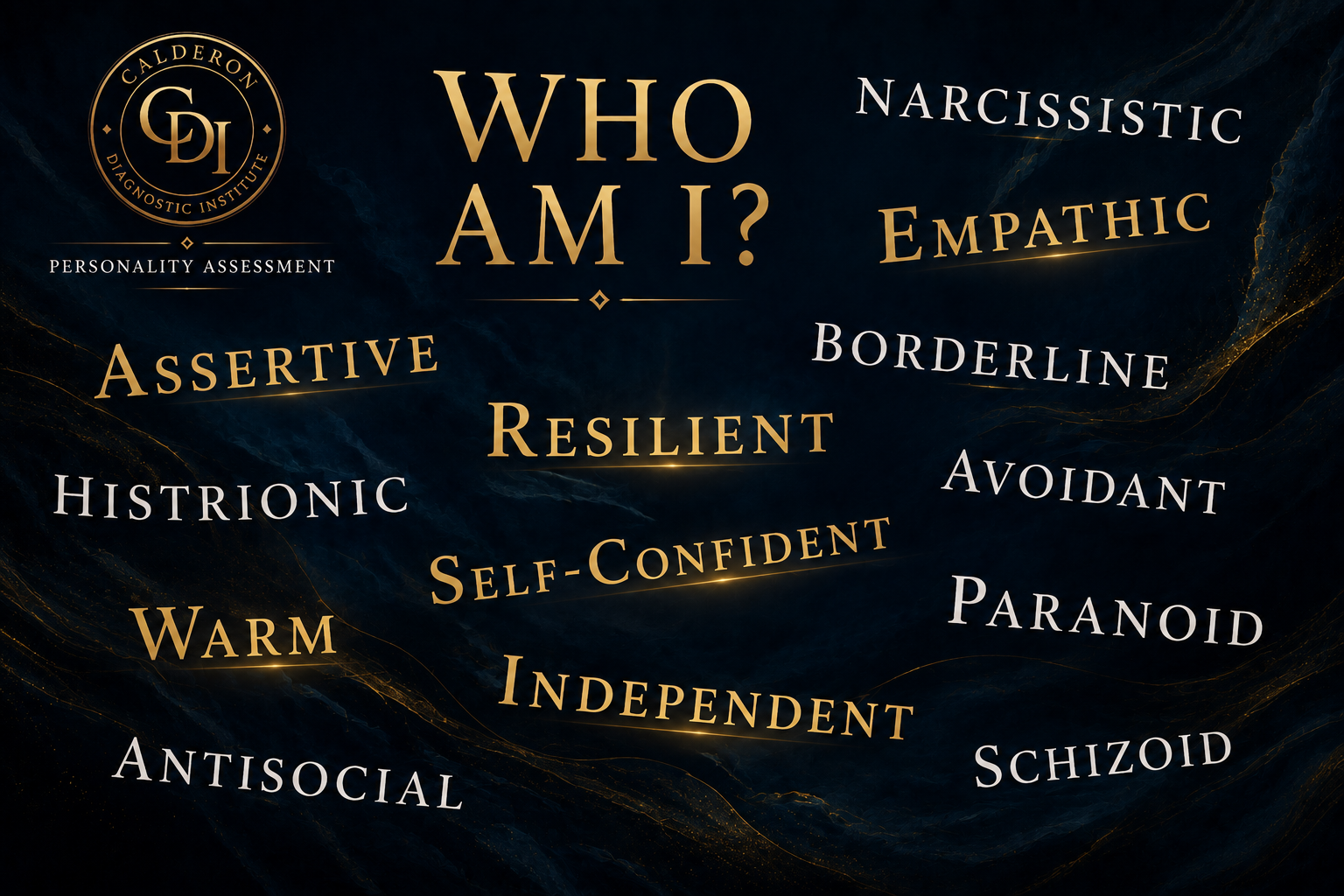
Understand the patterns shaping your life, including the parts that work well and the parts that create problems.
Explore personality, emotional functioning, relationships, coping, identity, strengths, vulnerabilities, and more difficult traits through a comprehensive psychologist-led assessment.
Understand what supports you, what gets in your way, and whether patterns such as narcissistic, borderline, avoidant, obsessive-compulsive, dependent, antisocial, psychopathic, or other traits may be relevant.
Thoughtful, individualized interpretation. You’ll never be reduced to a test score, personality “type,” or diagnostic label.
Private. Virtual. Comprehensive.

Read more below
Facing the Full Self
Personality assessment is for people who want to look deep inside themselves. It is for those willing to see the parts of themselves that are easy to recognize and the parts that are harder to face.
No one is perfect. We all carry light and dark. Strengths and sharp edges. Parts we show the world and parts we hide, even from ourselves. Looking at the full picture can help us feel more whole, stop performing, and move toward a more meaningful life.
This work is available for adults and adolescents.
Assessment may include the Minnesota Multiphasic Personality Inventory-3 (MMPI-3), Millon Clinical Multiaxial Inventory-IV (MCMI-IV), and Personality Assessment Inventory (PAI) as clinically appropriate. Adolescent measures may include the MMPI-A-RF, MACI-II, and PAI-A.
More Than a Type
This is not a Myers-Briggs quiz that hands you a neat label. It looks under the surface at the real patterns that guide how you protect yourself, handle stress, feel emotions, connect with people, and deal with pressure.
It shows what works. It also shows what costs you. Including the darker parts.
The goal is not to put you in a box. The goal is to understand how your personality is actually built.
Traits, Problems, and the Shadow
Everyone has lasting traits. Everyone has ways of staying safe. Everyone has weak spots.
Sometimes those traits become rigid or harmful. This can include narcissism, callousness, manipulation, emotional coldness, paranoia, or borderline patterns. These are not cartoon villains. They are old survival strategies that now create distance, control, or pain.
A careful assessment helps distinguish normal personality variation from patterns that are causing meaningful problems. It does this without forcing simple answers or pretending the darker parts are not there.
Personality testing with instruments such as the MMPI-3, MCMI-IV, and PAI can identify patterns involving warmth, empathy, assertiveness, independence, self-confidence, and resilience, as well as emotional instability, impulsivity, suspiciousness, hostility, grandiosity, dependency, avoidance, rigidity, aggression, interpersonal detachment, and difficulty regulating emotions. These traits are interpreted within the broader pattern of personality functioning rather than as isolated scores or labels.
What Clear Understanding Can Give You
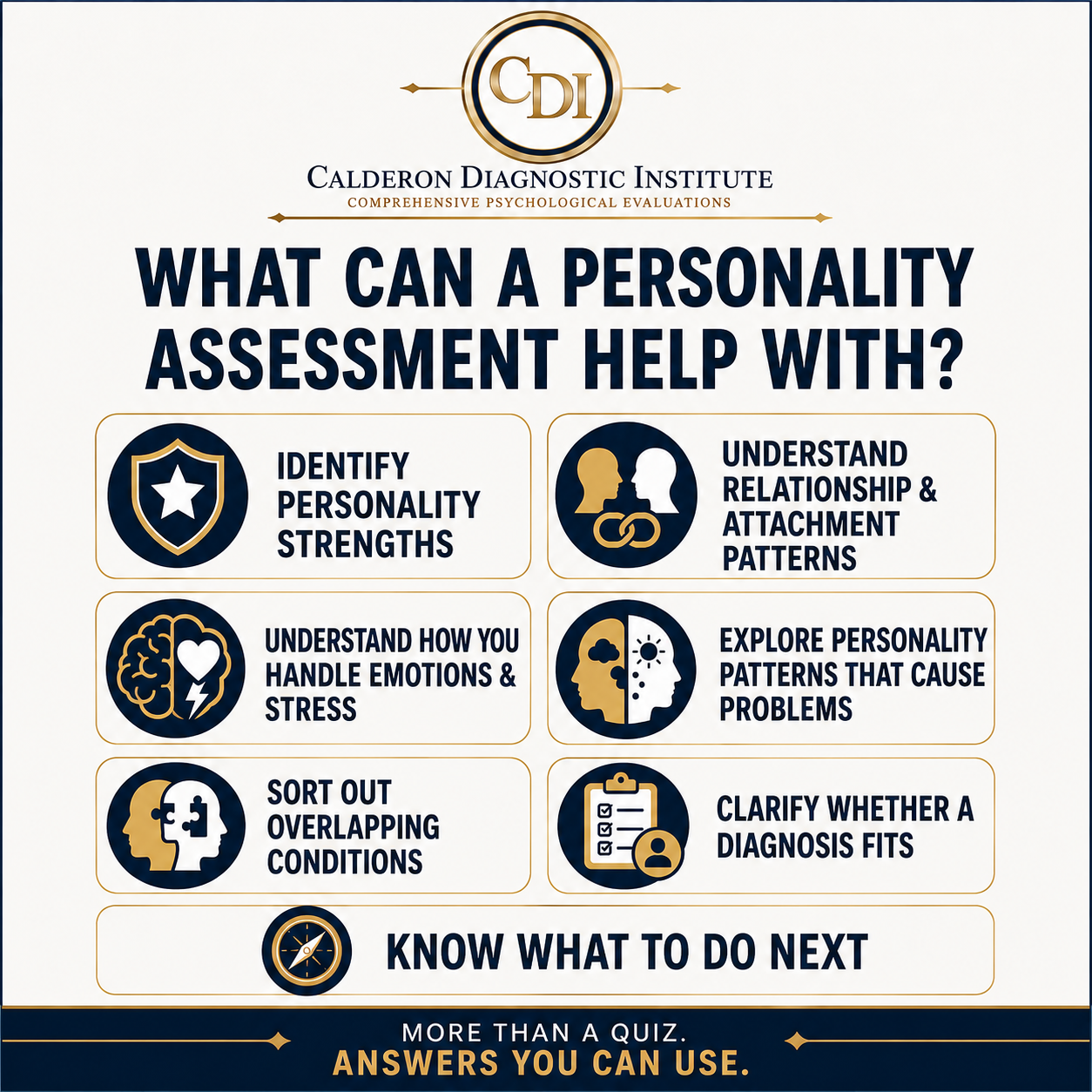
Clear assessment can show why certain situations bring up shame, withdrawal, anger, or collapse. It can show the repeated patterns in your closest relationships. It can show the quiet beliefs you hold about yourself and other people. It can show the ways you protect yourself that both help and limit you. And it can show how your strengths, weak spots, and shadow parts work together.
For most people, one of the most meaningful parts of assessment is finally having language for experiences and patterns they have struggled to explain. That understanding can create a stronger foundation for change.
What Are Personality Disorders?
Personality disorders are enduring patterns in how a person thinks, feels, relates to others, and responds to stress. These patterns can become rigid or difficult to change and may create problems in relationships, work, self-esteem, emotional regulation, or everyday functioning.
Common personality disorders include borderline, narcissistic, avoidant, obsessive-compulsive, paranoid, dependent, histrionic, antisocial, and schizoid personality disorders. Personality assessment can help distinguish these longer-standing patterns from conditions such as depression, anxiety, trauma-related disorders, or other clinical symptoms.
Personality disorders can improve with treatment. Psychotherapy is often central to treatment and may include approaches such as dialectical behavior therapy (DBT), schema therapy, mentalization-based treatment, cognitive behavioral approaches, or psychodynamic psychotherapy. The specific approach depends on the person’s patterns, symptoms, strengths, relationships, needs, and goals.
The Whole Person
At Calderon Diagnostic Institute, personality assessment is not mainly about giving a diagnosis. It is a careful look at the full person. This includes personality structure, emotions, relationship patterns, ways of coping, strengths, weak spots, and the darker currents that move under the surface.
The result is one integrated picture of how you function, why certain patterns keep returning, and where meaningful change may be possible.